


 Large Bag
 Travel Pack

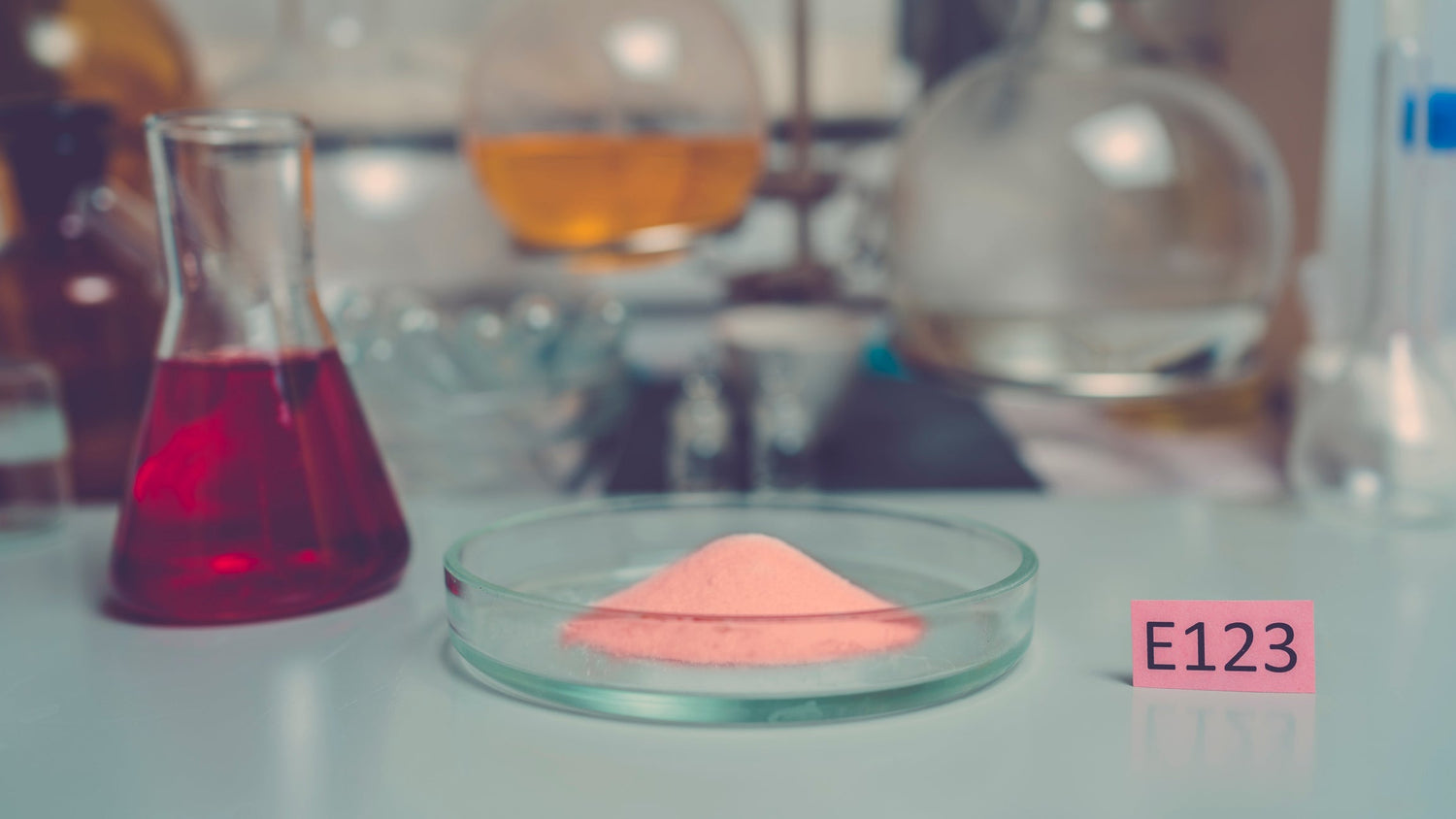
Food dyes have always captured attention, transforming plain foods into something fun and vibrant. Bright reds, bold blues, and sunny yellows in candies, drinks, and snacks typically come from synthetic dyes designed to be inexpensive and reliable. However, growing health concerns, waning consumer trust, and new regulatory scrutiny are starting to reveal cracks in this once-steady system. Dyes are no longer just about looks; they are being judged through the lens of safety, ethics, and transparency. For individuals who care about what goes into their bodies, this is a pivotal moment where science, advocacy, and personal choice converge to demand cleaner alternatives.[1]
Shoppers and regulators alike are beginning to see synthetic dyes as outdated leftovers from an earlier era of food production. Grocery shelves and even school cafeterias have begun to transform into test runs for dye-free foods, driven by both new regulations and consumer demand. Food companies and ingredient makers are scrambling to find replacements that feel safe, while still maintaining the products' color and taste, as people expect.
Biotechnology and forward-thinking startups are stepping up with options like precision fermentation and more stable plant-based pigments. This movement is not just about cutting out a controversial additive, but about rethinking the way we color our food from the ground up.[2][3]
What Synthetic Dyes Are Actually Made From
Many synthetic food dyes are made from petroleum-derived chemicals, which is one of the main reasons health concerns have grown around them. Compounds such as benzidine and aniline are used during production, and several of these have been identified as possible carcinogens. Artificial colors, such as Red 40, Yellow 5, and Yellow 6, often contain residues of these petroleum byproducts, along with aluminum and other heavy metals used to stabilize the pigments. While the amounts of food are considered “safe” under current regulations, growing research indicates that even low-level exposure can have an impact on children’s behavior and may contribute to long-term health risks. Knowing that many of these colors come from petroleum rather than natural sources has fueled consumer demand for cleaner, plant-based alternatives.[4][5]
The FDA and HHS Move to Phase Out Synthetic Dyes
In 2025, the U.S. Department of Health and Human Services and the Food and Drug Administration announced a sweeping initiative to phase out all petroleum-based synthetic dyes by the end of 2026. This directive included revoking authorization for Citrus Red No. 2 and Orange B, expediting the removal of Red No. 3, and pushing the industry to voluntarily eliminate Blue 1, Blue 2, Green 3, Red 40, Yellow 5, and Yellow 6. The agency also expedited approval for several new natural color additives, providing manufacturers with more options to reformulate. These changes show a growing awareness that synthetic dyes have had their time and are no longer needed in today’s food supply. For the first time, government action is clearly prioritizing long-term health over the short-term, flashy appeal of artificial colors.[6][7]
At the same time, state laws are strengthening this shift across the country. California’s Food Safety Act will remove Red No. 3, along with several other additives, from store shelves starting in 2027. Momentum is building in other states as well, with new restrictions showing that this shift is spreading far beyond California. In New York, lawmakers are pushing even further by introducing bills that would remove not only artificial food dyes but also controversial compounds like titanium dioxide.[8]
These policies ensure that national brands cannot simply ignore dye bans by producing region-specific formulations. The combined weight of federal and state action guarantees that the phase-out will be comprehensive and permanent. For food companies, the era of synthetic coloring is officially coming to a close.[9]
How Widespread Are Synthetic Dyes?
Synthetic food dyes appear far more frequently than most people realize. A national survey recently found that one in five packaged foods and drinks contains at least one dye, and not always in the places you would expect. Everyday items like taco shells, hot dog buns, and even blueberry bagels are often colored to look uniform and appealing. Seeing them appear in basic staples makes it clear just how deeply artificial colorants have become woven into our food system. It also highlights the need for comprehensive reform, rather than piecemeal bans on a select few categories.[8]
The heavy use of dyes also highlights how misleading assumptions have shaped consumer expectations. Most people picture bright candies, sodas, or sugary cereals when they think of artificial colors. In reality, dyes often appear in foods people consider plain or savory, which erodes transparency and challenges the assumption that only candy or soda are affected. Reliance on synthetic colorants has long reflected a system that prioritized shelf consistency over actual health. Thanks to new regulations and growing consumer pressure, that system is beginning to change.[10]
Health Concerns and Consumer Advocacy
Worries about food dyes aren’t going away. Many parents notice their kids act more restless or hyper after eating products with Red 40 or Yellow 5. Doctors are observing the same patterns and have begun speaking out, advocating for stricter limits on what is added to children’s food. In California, the Office of Environmental Health Hazard Assessment reviewed the evidence. It gave even more weight to these concerns, adding fuel to the push for reforms that put children’s health first.[11]
More than two dozen clinical studies have found significant evidence of behavioral changes in children after dye exposure. Animal research has also revealed cancer risks, particularly with Red 3 and Citrus Red 2, which further supported the FDA’s decision to act. When an additive offers no nutritional benefit yet carries measurable risk, its removal becomes a matter of common sense.[12]
Consumer advocacy has been central to this shift. Parents have been some of the most powerful voices in this movement, often noticing big changes in their kids’ behavior once dyes are taken out of everyday meals. Advocacy groups have carried those stories into the spotlight and paired them with solid research, keeping steady pressure on lawmakers to act. Public campaigns have also pointed out the double standard of companies selling dye-free products abroad while leaving artificial versions on U.S. shelves. A coalition of parents, scientists, and activists has built momentum that regulators and corporations are finding harder and harder to ignore.[13]
Industry Response: Corporate Commitments
Big food brands are starting to make moves, albeit with some hesitation. Kraft Heinz, Nestlé, General Mills, and J.M. Smucker have each announced plans to remove synthetic dyes from U.S. products within the next couple of years. Reformulation is already underway for Kraft Heinz classics like Jell-O and Kool-Aid, while Nestlé is removing dyes from its candy and beverage lines. In this case, change is not only about following new regulations, but also about rebuilding trust with shoppers who have been voicing concerns for years. With clean-label claims becoming a market advantage, reformulating with natural colors is both a necessity and an opportunity.[14]
Ingredient suppliers are making parallel moves to expand options for manufacturers. Some suppliers are starting to take a more down-to-earth approach. Sensient has been growing more crops, such as red radish, to use as natural coloring, while other companies are testing fermentation methods to produce pigments on a larger scale. What is unfolding looks less like a rush to cut costs and more like a shift toward supply chains that value stability and transparency just as much as price.[15]
What we are seeing is a supply chain that is no longer just about cutting costs, but one that is beginning to prize stability and transparency in a way it never has before. Industry leaders recognize that failure to adapt could mean losing relevance in an increasingly health-conscious market. The pressure to change is as much economic as it is regulatory.[16]
Natural Alternatives and Biotech Innovation
Synthetic dyes are being pushed out, and that has opened the door for natural colors to take their place. Substitutes like beet juice, berry extracts, annatto, spirulina, and even cochineal are among the most common swaps you will see right now. People connect with these options because they recognize the sources and feel better about eating them. The challenge is that natural pigments are not always stable, so they can fade or change when exposed to heat, light, or shifts in acidity. Food manufacturers are still working on how to maintain those colors consistently in large-scale production.[17]
Biotech is starting to offer a way forward. Through precision fermentation, scientists can make colors that hold up better on the shelf while still coming from natural origins. Small companies in this space are getting serious backing, and the market is expected to grow fast in the years ahead. Natural ingredients supported by modern technology could give both shoppers and regulators what they want, making food look appealing without relying on petroleum-based dyes.[18]
Natural ingredients enhanced through modern science have the potential to satisfy regulators while giving consumers the clean, reliable options they are asking for. Innovation is moving toward a future where traditional plant extracts can be enhanced with biotech methods to produce pigments that are safe, stable, and highly effective.[19]
Future Prospects: Regulation, Innovation, and Consumer Power
The trajectory for the food industry is clear. A combination of regulatory bans, consumer advocacy, and corporate responsibility is driving the decline of synthetic dyes. At the same time, innovation in natural and biotech colorants ensures that replacements will not only meet expectations but may eventually outperform synthetics. The transition will take time, but it is happening faster than many anticipated. Companies that position themselves early as leaders in clean-label innovation will capture lasting consumer loyalty.[20]
For consumers, this shift brings a sense of empowerment. Choosing dye-free options is no longer limited to specialty stores but is now possible in everyday grocery aisles. Bans on synthetic colors have pushed transparency and integrity into the spotlight, turning them into new expectations rather than rare exceptions. Growing awareness about health and sourcing is giving shoppers the ability to influence how food is made. Looking ahead, appearance will matter less than the trust and safety that come with what is on the label.[21]
Conclusion
FDA action on Red 3 is a sign that the tide is finally turning on synthetic dyes. For years, artificial colors were treated as if they were a necessary part of selling food, but that story is starting to fall apart. Companies are beginning to replace those bright chemical hues with natural and bio-based colors that align with today’s health priorities. Big food brands are making changes because they know this is not just a passing moment; it is the direction things are headed. Shoppers are pushing it too, proving that consumer pressure and awareness can move even the biggest players in the industry. Together, these changes are carving out a new model where safety, authenticity, and trust matter more than bright, artificial aesthetics. Health-conscious individuals see this as a long-overdue win.[22]
Clean-label products are gaining traction in the mainstream, while additives that were once hidden in ingredient lists are steadily being phased out under the pressure of scientific advancements and consumer demand. The foods of tomorrow will still be colorful, but those colors will come from sources that nourish instead of harm. FDA action may have started with Red 3, yet it signals the larger collapse of synthetic dyes as a whole. What emerges is a food system that is cleaner, more transparent, and more closely aligned with the values of the people it serves.
Citations:
-
Pointing, Charlotte. “A New Study Finds Synthetic Dyes in One of Five U.S. Foods, Raising Health Concerns, Especially for Kids.” VegNews, 9 July 2025, vegnews.com/food-dyes-study.
-
“Is Now the Time for Natural Food Colors?” Chemical & Engineering News, 8 May 2025, cen.acs.org/food/food-ingredients/time-natural-food-colors/103/web/2025/05.
-
“Fermentation in Focus as FDA Targets Synthetic Food Dyes.” AgFunderNews, 22 Apr. 2025,agfundernews.com/fermentation-will-power-next-wave-of-natural-colors-say-startups-as-fda-targets-synthetic-food-dyes.
-
Amchova, Petra, et al. “Food Safety and Health Concerns of Synthetic Food Colors.” Toxics, vol. 12, no. 7, 2024, article 466, https://www.mdpi.com/2305-6304/12/7/466.
-
“Synthetic food dyes are made with petroleum-oil-based chemicals and linked to health harms.” Environmental Working Group, 27 Mar. 2024, https://www.ewg.org/news-insights/news/2024/03/what-food-dye.
-
U.S. Department of Health and Human Services and Food and Drug Administration. “HHS, FDA to Phase Out Petroleum‑Based Synthetic Dyes in Nation’s Food Supply.” FDA Press Release, U.S. Department of Health and Human Services, 22 Apr. 2025. nationalaglawcenter.org+15fda.gov+15chpa.org+15
-
U.S. Food and Drug Administration. “FDA Approves Three Food Colors from Natural Sources.” FDA Press Release, U.S. Department of Health and Human Services, 9 May 2025. mwe.com+8hhs.gov+8fda.gov+8
-
Sanzo, Kathleen M. “State Legislation on Color Additives in Food: Takeaways for Industry.” Well Done: Your Source on Food Litigation and Regulation, Morgan Lewis, 14 May 2025, well-done.morganlewis.com/blogs/welldone/2025/05/state-legislation-on-color-additives-in-food-takeaways-for-industry.
-
“Lawmakers Introduce Bills to Protect New Yorkers from Dangerous Food Additives Known and Unknown.” CSPI Press Release, Center for Science in the Public Interest, 5 Mar. 2024, cspi.org/press-release/lawmakers-introduce-bills-protect-new-yorkers-dangerous-food-additives-known-and.
-
Dunford, Elizabeth, et al. “Synthetic Dyes in US Packaged Foods and Beverages.” Journal of the Academy of Nutrition and Dietetics, vol. 125, no. 7, 2025, pp. 1234–1240.apnews.com+15pubmed.ncbi.nlm.nih.gov+15jandonline.org+15
-
“Food Dyes Are Lurking in Surprising Places.” Time, 7 July 2025.time.com+2eatrightpro.org+2
-
“Many American Foods Still Use Dyes Linked to Hyperactivity.” Chalkbeat, 14 July 2025, www.chalkbeat.org/newyork/2025/07/14/food-dyes-hyperactivity-rfk-jr-kids.
-
Miller, Margaret D., et al. “Potential Impacts of Synthetic Food Dyes on Activity and Behavior.” Environmental Health, vol. 21, no. 64, 2022, pp. 1–12.
-
“Meta-Analysis Finds Removing Artificial Food Dyes Reduces Hyperactive Behavior in Children.” EPER (Environmental Performance Report), 11 Apr. 2025, www.eper.com/blog/dyeing-for-change-how-you-can-join-the-fight-against-artificial-food-dyes-in-the-u-s.
-
Food giants announce plans to eliminate synthetic dyes from US products by 2028. The Chemical Engineer, 30 June 2025. industryresearch.biz+15thechemicalengineer.com+15apnews.com+15
-
Kraft Heinz Commits to Remove FD&C Colors From Its U.S. Portfolio Before the End of 2027. Business Wire, 17 June 2025. people.com+7news.kraftheinzcompany.com+7foxbusiness.com+7
-
The Color of Change: How the Shift from Synthetic Dyes Is Transforming the Food Industry. AINVEST News, 23 April 2025. facebook.com+15ainvest.com+15garg-law.com+15
-
Feitosa, B. F., et al. “Review of Microencapsulation Techniques to Improve the Stability of Fruit Anthocyanin Colorants.” Journal of Food Engineering, vol. 340, 2025, 111054. sciencedirect.com+2sciencedirect.com+2
-
“Precision Fermentation Ingredients Market Worth $36.31 Billion by 2030.” MarketsandMarkets, 29 May 2025, www.marketsandmarkets.com/PressReleases/precision-fermentation.asp. custommarketinsights.com+6marketsandmarkets.com+6prnewswire.com+6
-
Zeng, S., et al. “Biotechnology Advances in Natural Food Colorant Acylated Anthocyanins.” Food Frontiers Technology, 2025, Article e000527. researchgate.net+10iadns.onlinelibrary.wiley.com+10pmc.ncbi.nlm.nih.gov
-
Clean Label Ingredients Market Poised for Significant Growth Amid Rising Demand for Natural and Organic Food Products. Future Market Insights, 24 Feb. 2025, www.globenewswire.com/news-release/2025/02/24/3030895/0/en/Clean-Label-Ingredients-Market-Poised-for-Significant-Growth-Amid-Rising-Demand-for-Natural-and-Organic-Food-Products-Future-Market-Insights-Inc.html?utm_source=chatgpt.com.
-
Natural Food Colors & Flavors 2025 – Growth and Market Trends. The Business Research Company, 2025, www.thebusinessresearchcompany.com/report/natural-food-colors-and-flavors-global-market-report.







Leave a comment
All comments are moderated before being published.
This site is protected by hCaptcha and the hCaptcha Privacy Policy and Terms of Service apply.